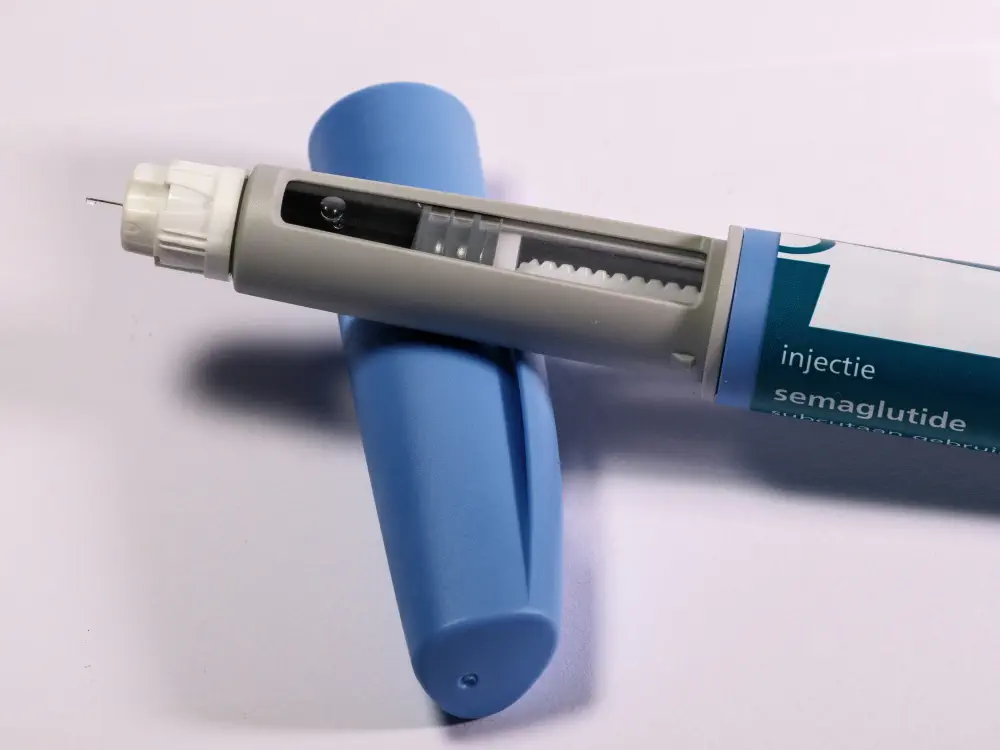
Using slimming medications to improve your cycling performance, is that allowed and is it wise?
A new generation of medicines, of which Ozempic and Wegovy are the two most prominent, is by many labeled as a societal game changer. You understand why, if you know that the World Health Organization says that 2.5 billion adult people have overweight (a BMI of 25 or higher) or obesity (BMI above 30). With the expectation that this number in 2035 will exceed 50 percent of the world population.
The supermarkets are not happy
More than 15 percent weight loss, which reduces the number of heart attacks by 20 percent, and supermarket chain Walmart experiences in America a strong decline in food sales as a result of the introduction of the new miracle remedies.
Both Ozempic and Wegovy are produced by the Danish company Novo Nordisk, and the active substance is semaglutide. Ozempic is prescribed for diabetes, while Wegovy is a higher dose that is intended for weight loss in obesity. How it works has to do with semaglutides. These receptors help to increase the release of insulin, which in turn lowers the blood sugar level. Hence the prescription for type 2 diabetics. But it appears that another effect of this medicine is that the feeling of hunger and appetite are suppressed by acting centrally on the brain. This leads to these astonishing stories about weight loss. The 15.2 percent weight loss that came from the studies of Novo Nordisk means that the average participant in the trials lost 15.9 kilos.
If you then look at that with a cycling lens, then these results are groundbreaking. The ratio between power and weight is the most important performance value for climbers. Let us look at how semaglutides can influence this ratio. The fastest recorded time on Strava for climbing the 13.8 kilometer long Alpe d’Huez is 39.21 minutes. Ridden by Sepp Kuss during the Tour de France of 2022. Let us assume a test person who weighs 68 kilos. If this person climbs Alpe d’Huez with a power of 307 watts, which corresponds to 4.5 w/kg, then he would need 50.28 minutes. But if our test subject takes semaglutides and would lose 15 percent of his body weight, then he drops back to 57.8 kg, which would increase the power to weight ratio to 5.3 w/kg and improve his time to only 44.51 minutes – a saving of almost six minutes.
All on Ozempic
Okay Doc, where can I sign up? Not so fast! This climbing performance is a flawed comparison, partly because of that significant weight loss. Many of the individuals who achieved the 15 percent started from a benchmark of more than 100 kilos. Competitive amateur riders usually sit well below that weight, especially those at the top of the pyramid, and therefore do not qualify for such improvements. Still, that does not mean that even riders of 68 kilos do not lose weight by using these medicines to gain a performance advantage.
At this moment there is hardly any literature about the use of those semaglutides in a sporting context. A medicine that is designed for people with obesity or diabetes will not easily pass an ethical sports committee. All studies have been done in people with a BMI of at least 30, and often much higher than that.
WADA’s monitoring list
That of course does not mean that the above cannot happen in the future. We know the studies about the performance improvements that EPO can offer, that is designed to treat severe anemia. But if athletes want to experiment with these slimming medicines, they would have to bypass the doctors who are currently only allowed to prescribe this medicine for therapeutic reasons.
The World Anti-Doping Agency (WADA) states: “Ozempic (semaglutide) is not a prohibited substance. It is however on the Monitoring Program to detect potential patterns of misuse in sport.” Interesting is that this program also includes everyday substances like caffeine and nicotine for monitoring during competition.
To let a substance “promote” from the monitored list to the prohibited list, it must meet two of the following criteria: it has the potential to improve sport performance, or it improves sport performance; it poses an actual or potential health risk for the athlete; and it violates the spirit of sport. As it looks now, you could argue that taking a semaglutide violates the spirit of sport. But the other criteria? It is too early to judge that.
Less muscle mass
The weight loss also includes fat-free mass, in other words muscle mass, which can explain up to a third of the decrease. In obese individuals that is not the end of the world, because when you have lost a lot of fat mass, you also no longer need such large leg muscles. In athletes that is clearly not ideal.
Then there is the potential risk for an athlete. The most common are nausea, vomiting, diarrhea, abdominal pain and constipation. There is however a long history of failed obesity medicines that were prescribed and then withdrawn. When you have medicines that change perceptions in the brain, it is fine if it concerns specific perceptions of hunger, but problems arise when it has more general effects on the brain. There have been medicines that were taken off the market because they gave some users suicidal feelings, while another led to heart valve problems and pulmonary hypertension from which you can become very short of breath.
There are two additional reasons why cyclists should look elsewhere. The first is that there is a small risk of hypoglycemia. These are low blood sugar levels, which is the last thing cyclists need. And then there is also the ethical dilemma that shortages can arise. These medicines should really be reserved and used for the people who need them most. These medicines can change the life of people who struggle with obesity.
Warning
Although suppressing appetite is good for losing weight, slimming medicines are not ideal if you burn thousands of calories daily. You need calories to let your body recover and grow, and to strengthen your immune system. If you no longer feel hunger, you quickly run the risk of overtraining and illness.
About the Author